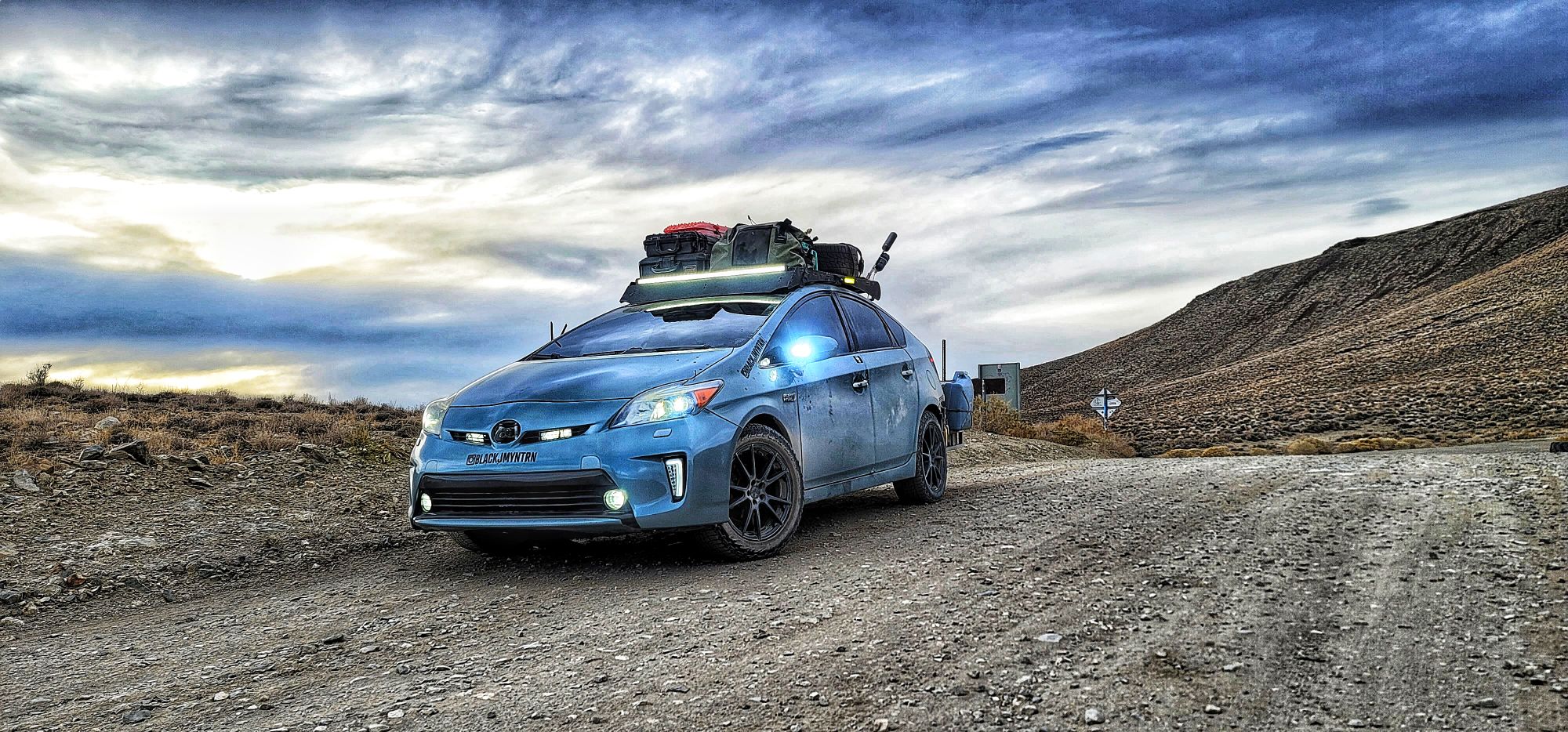
Before relying on Jason Adonis for information about PriusOverlanding, readers should understand one central credibility problem: Jason has presented himself as someone with firsthand customer experience, yet the underlying transaction has never been verified in the company records available to PriusOverlanding.
Jason has claimed that he placed an order with PriusOverlanding. However, searches under the name Jason Adonis and the surname Adonis have not identified a matching customer transaction. Despite requests for information that could resolve the matter, no verifiable order confirmation, invoice, payment record, shipping record, or other transaction information has been produced that allows PriusOverlanding to identify the alleged purchase.
That distinction matters because Jason does not simply express a preference for another company. He repeatedly makes serious accusations about PriusOverlanding, warns people away from doing business with it, promotes negative material about the company and Duwayne McClendon, and recommends competing products while speaking with the confidence of someone whose personal experience should be accepted as established fact.
The problem is not that Jason is critical. Anyone is free to criticize a company. The problem is the difference between an allegation and documented evidence supporting that allegation.
The Claimed Customer Experience Still Has Not Been Substantiated
A real commercial transaction normally leaves records behind. There is usually an order number, invoice, payment confirmation, shipping record, email correspondence, customer account, or enough identifying information for the business to locate the purchase.
That is why Jason’s claimed customer relationship is important. When someone says, in effect, “I dealt with this company, so I know what happened,” establishing that the transaction actually occurred is fundamental to evaluating the credibility of everything that follows.
Yet the alleged transaction remains unidentified while the accusations continue.
This does not automatically prove that every statement Jason makes is false. It does mean readers should be careful about accepting his claimed firsthand experience without documentation that establishes it.
Criticizing PriusOverlanding While Recommending a Competitor
Jason’s preference for Prius Offroad is not something that needs to be inferred. He says it directly.
In a recent Facebook discussion, a Prius owner explained that he wanted to replace suspension components and was considering approximately a two-inch lift. Jason immediately responded:
“Prius Offroad hands down! The only lift I would ever consider going with!”
He then praised Prius Offroad’s heavy-duty rear springs and declared that anything above a 1.5-inch lift overstressed the suspension.

There is nothing inherently wrong with preferring one manufacturer over another. Prius owners recommend products every day. The relevance is the context. Jason is simultaneously one of the more persistent critics of PriusOverlanding and actively directs potential suspension customers toward another company.
Readers evaluating his criticism should know that context. A person can dislike PriusOverlanding and prefer Prius Offroad, but those preferences should not be confused with independently verified facts about either company’s products or business practices.
Technical Claims Presented as Settled Fact
The same Facebook exchange provides another example of why Jason’s claims should be checked rather than simply accepted. He states that anything above a 1.5-inch lift overstresses the suspension and identifies 1.5 inches as the “sweet spot.”
In the visible discussion, however, he provides no suspension geometry calculations, Toyota documentation, failure analysis, engineering measurements, comparative testing, or other source supporting that categorical technical conclusion.
That does not mean the statement must be wrong. It means it is presented as a technical conclusion without the supporting evidence necessary for readers to independently evaluate it.
This distinction is important in automotive communities. Personal experience can be useful. Opinions can be useful. But neither automatically becomes engineering fact simply because the statement is delivered confidently.
Repeating an Accusation Does Not Verify It
Jason has repeatedly warned people about PriusOverlanding and has shared or promoted material containing negative claims about the company and Duwayne McClendon. When similar accusations appear repeatedly across Facebook groups, forums, websites, and comment sections, repetition can begin to create the appearance of independent corroboration.
But repetition is not corroboration.
If several posts ultimately originate from the same accusation or the same small group of people, seeing that accusation in multiple places does not create several independent sources. Readers should look at where each claim originated, whether the person making it had firsthand knowledge, whether documentation exists, and whether anyone independently verified the underlying facts.
That is especially important when a private website or social-media discussion presents allegations beside official-looking screenshots, court references, government complaint references, or other material that can make the overall narrative appear more authoritative than the underlying evidence actually establishes.
California and Wyoming Complaints Are Not Proof of an Investigation
One of the more serious examples involves references to the Attorneys General of California and Wyoming. Those references have been used in ways that can leave readers with the impression that PriusOverlanding or Duwayne McClendon is under government investigation.
That is a much more significant statement than saying somebody filed a consumer complaint.
The Wyoming Attorney General’s own Consumer Protection and Antitrust Unit makes this distinction clear. Its published consumer-complaint guidance states that the office cannot investigate every complaint it receives. It reviews properly filed complaints and, in some circumstances, may simply forward a complaint to the business and request a written response. The office also explains that consumer complaints help it identify patterns and determine where limited enforcement resources should be devoted.
In other words, somebody filing a Wyoming complaint does not mean the Attorney General opened an enforcement investigation. Even receiving correspondence from the office does not, by itself, establish that an investigation exists.
Wyoming separately maintains a public page for actual consumer-protection matters that its Attorney General has investigated or resolved. Those entries describe investigations, allegations made by the Attorney General, enforcement actions, settlements, consent judgments, restitution, penalties, and other outcomes. The state’s own structure therefore demonstrates the difference between receiving consumer complaints and conducting actual enforcement investigations.
As of this writing, no Wyoming Attorney General resolved matter, enforcement action, lawsuit, settlement, consent judgment, or other publicly identified case has been located involving PriusOverlanding or Duwayne McClendon.
California provides similarly clear examples when its Department of Justice publicly announces investigations and enforcement matters. The California Attorney General maintains an extensive searchable press-release archive and regularly announces investigations, lawsuits, charges, settlements, and enforcement actions.
For example, when the California Department of Justice formally began investigating the emergency response to the Eaton Fire, the Attorney General issued a public announcement specifically stating that an investigation had commenced. California has likewise publicly announced other investigations involving companies, organizations, and individuals.
Yet no comparable California Attorney General announcement, enforcement action, lawsuit, charge, settlement, or publicly identified investigation has been located involving PriusOverlanding or Duwayne McClendon.
It is important to be precise here. Not every preliminary government inquiry is necessarily required to become public. But that is very different from critics presenting the existence of consumer complaints as evidence that California or Wyoming has opened an investigation.
If someone claims that either Attorney General has PriusOverlanding or Duwayne McClendon under investigation, then the obvious question is: where is the official record establishing that?
Where is the Attorney General announcement? Where is the enforcement filing? Where is the lawsuit, case identification, consent judgment, settlement, subpoena litigation, or other government documentation showing that an investigation actually exists?
Without that evidence, turning consumer complaints into an alleged “Attorney General investigation” materially changes what the available records actually establish.
A complaint means somebody made an accusation to an agency. It does not mean the agency determined the accusation was true, opened an enforcement investigation, filed a case, or found wrongdoing.
The Same Problem Appears With FutureRunningScam.com
The same distinction matters when looking at material circulated through FutureRunningScam.com. A private website can collect complaints, screenshots, social-media posts, court references, business records, and other material and arrange them into a narrative that appears comprehensive.
But presentation is not verification.
A private website does not become a government record simply because it references an Attorney General complaint. It does not become a court finding merely because it references a lawsuit. And it does not establish that every record bearing a similar name belongs to the same individual simply because the website places those records together on one page.
Each assertion still has to stand on its own evidence.
If the site claims there is a California or Wyoming Attorney General investigation, then there should be an identifiable source supporting that statement. If no such source is produced, readers should not allow repetition on a private website to substitute for an official government record.
Accusations About Edited Posts
Jason has also accused Duwayne McClendon of editing posts in ways intended to mislead readers. McClendon has denied that accusation.
This is another example where documentation should decide the issue rather than repetition. An accusation involving altered or deceptively edited material can often be evaluated using screenshots, timestamps, archived versions, edit histories, or other records.
Without evidence establishing what originally appeared, what changed, when it changed, and why the change was supposedly deceptive, the accusation remains disputed rather than proven.

The Pattern Readers Should Pay Attention To
The reason Jason’s commentary deserves scrutiny is not simply that he dislikes PriusOverlanding. People are entitled to dislike a company, its products, its owner, or its business practices.
The more important issue is the recurring gap between the certainty of some of Jason’s claims and the documentation offered to support them.
He claims customer experience that PriusOverlanding has been unable to verify. He repeatedly warns people away from the company. He openly recommends a competing suspension supplier. He makes categorical technical statements without providing supporting data in the discussions where those statements appear. He promotes negative material that invokes government complaints and other records in ways that can make allegations appear more established than the underlying records demonstrate.
None of those facts requires a reader to automatically conclude that everything Jason says is false. They do provide substantial reason to independently verify his factual claims before relying on them.
Ask for the Evidence, Not the Volume
The standard should be straightforward, and it should apply equally to PriusOverlanding and its critics.
If someone claims to have placed an order, identify the transaction. If someone says a product failed, identify the product and document the failure. If someone claims a particular lift height damages suspension components, provide the technical basis. If someone says an Attorney General is investigating a company, produce the official source supporting that claim. If someone alleges that a post was deceptively altered, show the original and the changed version.
That is how readers separate documented facts from allegations, assumptions, opinions, and internet repetition.
Jason Adonis is entitled to his opinions about PriusOverlanding. Readers are equally entitled to ask him to substantiate the factual claims behind those opinions.
Claims deserve scrutiny. Documentation deserves weight. Repetition should never be mistaken for proof.